Moving on to the old stuff now, opening up with another acquisition from last weeks local coin club show. This is a Tanka from the Delhi sultanate issued between 1240-1266.
there were several dynasties in the Delhi sultanate before Babur overthrew them to form the Mughal Empire. This coin comes under the Mamluk era, the same Turkic Slave generals who served in other muslim empires and went on to rule their own kingdoms from Egypt to India.
I like this piece because the calligraphy is relatively simple but elegant. More importantly, this piece escaped the Shroff marks
next up, a couple of Slovakian coins from what I believe is the collaborationist govt. the dates here are interesting. In 1939 Slovakia was formed, this 5Korun coin is I suppose the first of the fascist govt issues. It was deposed in 1944 which happens to be the date on the 50 korun coin. Around 95% Of the Jewish population was sent to German concentration camps where the majority were murdered. The slovak govt paid Germany 500Reich Marks for each individual deported for “lodging and retraining” !
added some interesting pieces from Spain and Philippines.
The first one is Ferdinand VII (?) from 1817. There is still some lustre from the Coat of Arms side! I must admit I dont know where a “maravedi” stands within Spain’s denominational system of the time. But that’s what is great about numismatics. Always learning.
the next piece is my first of Spanish Philippines. The only telltale sign for me is that the denomination is 50ctes de “Peso”. Else it has no aesthetic indication other than just another heraldic piece from europe
the final is a civil war coinage from Asturias y Leon. Again, my understanding of the nuances of that time is Spanish history is limited. But I picked this piece up because its a great curiosity piece of a very specific time in that countrys history
Great posts from everyone, I will have to have a proper read through all of the new items tonight!
All of the new coins I have ordered online have arrived now, so I will start posting them here over the next few days.
I will start with the first new coin I purchased:
Australia 1927 ‘Canberra’ Florin
Here is another 1927 Parliament House Florin for my collection. I have shown a number of these over the months so I won’t say much about this one — although I will say that this one in particular is a bit special compared to the others I have shown. Bonus points for anyone who knows what it is that makes this one special!
added some interesting pieces from Spain and Philippines.
The first one is Ferdinand VII (?) from 1817. There is still some lustre from the Coat of Arms side! I must admit I dont know where a “maravedi” stands within Spain’s denominational system of the time. But that’s what is great about numismatics. Always learning.
the next piece is my first of Spanish Philippines. The only telltale sign for me is that the denomination is 50ctes de “Peso”. Else it has no aesthetic indication other than just another heraldic piece from europe
the final is a civil war coinage from Asturias y Leon. Again, my understanding of the nuances of that time is Spanish history is limited. But I picked this piece up because its a great curiosity piece of a very specific time in that countrys history
Maravedis were the sub units of old Spanish reals. There were 34 Maravedis to a silver real. Its history goes back to an Arab silver coin which was converted to a medieval Spanish kingdoms one. It eventually lost value and become billon and them copper by the 16th century.
They were struck until 1847 and were minted throughout the Spanish Empire. Being copper, they took a hilding and were worthless on the scale of things, given you could get silver down to ¼ real in some cases, issuing them was almost pointless. They were worth more than the Portuguese Reis at least.
Nice coins though, the Philippine one is interesting, just before the Americans took it over.
I love coins. Especially silver, gold and anything really old.
Member of the Royal Numismatic Society of New Zealand and the Auckland Numismatic Society
Thanks for the explanation on the Maravedi Moneytane !
The maravedi piqued my interest because the portraiture was almost cartoonish bordering on a cheap counterfeit. it’s interesting that it was so worthless it was not deemed necessary to be properly machine minted even though by 1817, the technology was widely available. It stands in stark contrast to this coin of Louis XVIII minted a year earlier!
Great posts from everyone, I will have to have a proper read through all of the new items tonight!
All of the new coins I have ordered online have arrived now, so I will start posting them here over the next few days.
I will start with the first new coin I purchased:
Australia 1927 ‘Canberra’ Florin
Here is another 1927 Parliament House Florin for my collection. I have shown a number of these over the months so I won’t say much about this one — although I will say that this one in particular is a bit special compared to the others I have shown. Bonus points for anyone who knows what it is that makes this one special!
Your special Canberra Florin, is a Proof, has that mirrored field that has toned an attractive blue colour.
I love coins. Especially silver, gold and anything really old.
Member of the Royal Numismatic Society of New Zealand and the Auckland Numismatic Society
next up, a couple of Slovakian coins from what I believe is the collaborationist govt. the dates here are interesting. In 1939 Slovakia was formed, this 5Korun coin is I suppose the first of the fascist govt issues. It was deposed in 1944 which happens to be the date on the 50 korun coin. Around 95% Of the Jewish population was sent to German concentration camps where the majority were murdered. The slovak govt paid Germany 500Reich Marks for each individual deported for “lodging and retraining” !
Congratulations to many interesting additions! Even though Slovakian WW2 coins are quite common in central Europe, I guess they weren‘t so easy to come by in Canada. If I may add some information for the context of these coins, the declaration of the Slovakian state was the result of complicated geopolitical situation slightly before the WW2. Interwar Czechoslovakian Republic first lost its borderlands (called Sudeten by Germans) after 29th September 1938 due to the Munich agreement. The remains of the state existed as the so-called second Czechoslovakian Republic (where Slovaks had an autonomous government) until 15th March 1939, when the Czech part of the republic was occupied by the nazis and renamed Protectorate Bohemia and Moravia.
Already two days before the occupation, Hitler invited Jozef Tiso (later Slovakian prime minister and president, depicted on your 50 Ks coin) to Germany and forced him to declare the Slovakian independence from the rest of Czechoslovakia (the other option would be the occupation of Slovakian territory by Hungary). So as you wrote, Slovakian government was collaborating with the nazis (the independent Slovakian state existed thanks to them after all), but Slovakia wasn't occupied until 1944. In fact, its non-Jewish inhabitants could live in a relative prosperity and the state even issued silver coins for general circulation (the one you posted was a circulating commemorative celebrating the 5th anniversary of Slovakian independence by the way).
From the numismatic point of view, it’s interesting that the WW2 Slovakian state had its own mint after declaring independence (located in Kremnica), but no banknote printing works. Its banknotes were partially printed by Giesecke und Devrient in Germany and by the Banknote printing works in Prague (which was already in another state at that time). Only since the end of 1943, banknotes were also printed in the Slovakian printing house Neografia, located in today’s town of Martin (which was mainly a book printing company before these banknote issues).
So to start today, a large mix from the Isle of Man; all but one are circulation coins (The large motorbike 50p being non-circ). Just over half of the designs are completely new designs to me plus a couple of upgrades. Happy days.
Next up, a replica silver penny from the Durham mint 1279-1302 apparently. £2 for scale.
Of course, me being me, I didn't just get one or two…
Bought a job lot of 13. No idea what I'll do with them but for less than £1 a piece…
And finally, as people may have noticed I've been grabbing a few early British banknotes recently. Here's today's job lot haul…
11 provincial banknotes, all Backhouse (the Bank / Banker) which is super local for me. Got three different branches, Durham, Darlington, & Stockton-on-Tees. Here's the “best” (in my unprofessional opinion) of each.
And you may think they all are identical beyond the bank location name. Let's look closer…
As you can see, the left side of the picture is near enough identical with the lady leaning on a rock with a bird & snake on; dog resting below. But the right side is very different.
Durham shows Durham Cathedral & Prebends Bridge, both of which are still standing. The Cathedral is a UNESCO world heritage site; is over 900 years old, is the burial place of St Cuthbert & Bede, holds the fifth oldest surviving copy of the Magna Carter [The only 1216 copy, the older four are all 1215], often displays St Cuthbert's Gospel [The oldest Western book still in original covers & binding dating from a little before 700AD], and more recently has been a filming location for both Harry Potter and Avengers Endgame.
Darlington shows St Cuthbert's Church, the oldest in the town though otherwise unremarkable though lovely to visit. It does hold an unusual ringing machine from the 1870s, and a bunch of other earlier artefacts.
The bridge I don't recognise (which given I worked in the town centre for 5 years) so probably doesn't exist anymore.
Stockton shows sailing ships as it was a major harbour at the time. Indeed, it was the busiest port in Durham county. This was of course helped by being the terminus for the first public railway (Stockton to Darlington) so it was a major speedy coal & fabric exporter.
Interestingly enough, Backhouse the banker was a major investor in the railway. The profit & connections it brought allowed the bank to expand - the original branch was Darlington, the others were later acquisitions.
Of course, my notes are quite late (1880s) so were never used to help the railway (1825), but it's the same family business.
P.s. There are other differences; the Durham one for example doesn't have the seal thingy on the left, nor does the serial in top left have a dark patch behind it.
Stockton reads “Five” in top right compared to “£5” on the other two.
I'm wondering whether they mixed & matched security features so each bank had a different mix. Or might be a date based change.
Thanks for the explanation on the Maravedi Moneytane !
The maravedi piqued my interest because the portraiture was almost cartoonish bordering on a cheap counterfeit. it’s interesting that it was so worthless it was not deemed necessary to be properly machine minted even though by 1817, the technology was widely available. It stands in stark contrast to this coin of Louis XVIII minted a year earlier!
here come 2 kings and an emperor
The French were amongst the first to have a steam coin press with a collar, producing perfectly round and regular coins. Not sure what year, but I have seen Napoleon 5 Francs with it and my oldest is an 1811 Franc of Napoleon that appears to have that finish.
England was quick off the mark too, using such machines in 1797 to mint cartwheel copper coins and by 1805 bank tokens with all the general coinage in silver and gold except Maundy getting the technology in 1816.
Some places like Spain and Italian states, its not until the 1840s and 1850s you see perfectly round steam press coins.
I love coins. Especially silver, gold and anything really old.
Member of the Royal Numismatic Society of New Zealand and the Auckland Numismatic Society
Your special Canberra Florin, is a Proof, has that mirrored field that has toned an attractive blue colour.
Thank you, and you are correct!
This Canberra Florin exhibits all of the proof die markers. The two most obvious proof die markers on this coin are the ‘blob’ above the first ‘A’ in ‘Australia’, and the small dot to the left of the orb of the king’s crown. There are a couple of other die markers that only appear on proofs that this coin shows, I can go into further detail if anyone is interested.
It is likely that this one was not struck with the official specially prepared proof planchets, as the wire rim is only found on the obverse. (You would expect this to appear on both sides on a proof). You would also expect more cameo/mirroring — although this is definitely present, and a lot easier to see in person. As far as I am aware, the polished proof dies were used to strike a very minuscule amount of coins from regular planchets after the 400 proofs were struck for whatever reason. I believe this to be one of them.
Here are some better photos of the coin.
It has definitely been struck to proof specifications. (Look at those steps!) The ‘hairlines’ you see are actually die polish marks.
next up, a couple of Slovakian coins from what I believe is the collaborationist govt. the dates here are interesting. In 1939 Slovakia was formed, this 5Korun coin is I suppose the first of the fascist govt issues. It was deposed in 1944 which happens to be the date on the 50 korun coin. Around 95% Of the Jewish population was sent to German concentration camps where the majority were murdered. The slovak govt paid Germany 500Reich Marks for each individual deported for “lodging and retraining” !
Congratulations to many interesting additions! Even though Slovakian WW2 coins are quite common in central Europe, I guess they weren‘t so easy to come by in Canada. If I may add some information for the context of these coins, the declaration of the Slovakian state was the result of complicated geopolitical situation slightly before the WW2. Interwar Czechoslovakian Republic first lost its borderlands (called Sudeten by Germans) after 29th September 1938 due to the Munich agreement. The remains of the state existed as the so-called second Czechoslovakian Republic (where Slovaks had an autonomous government) until 15th March 1939, when the Czech part of the republic was occupied by the nazis and renamed Protectorate Bohemia and Moravia.
Already two days before the occupation, Hitler invited Jozef Tiso (later Slovakian prime minister and president, depicted on your 50 Ks coin) to Germany and forced him to declare the Slovakian independence from the rest of Czechoslovakia (the other option would be the occupation of Slovakian territory by Hungary). So as you wrote, Slovakian government was collaborating with the nazis (the independent Slovakian state existed thanks to them after all), but Slovakia wasn't occupied until 1944. In fact, its non-Jewish inhabitants could live in a relative prosperity and the state even issued silver coins for general circulation (the one you posted was a circulating commemorative celebrating the 5th anniversary of Slovakian independence by the way).
From the numismatic point of view, it’s interesting that the WW2 Slovakian state had its own mint after declaring independence (located in Kremnica), but no banknote printing works. Its banknotes were partially printed by Giesecke und Devrient in Germany and by the Banknote printing works in Prague (which was already in another state at that time). Only since the end of 1943, banknotes were also printed in the Slovakian printing house Neografia, located in today’s town of Martin (which was mainly a book printing company before these banknote issues).
Good read, thanks for the added insight! The Coins are by no means hard to find even in Canada. But price can sometimes be another thing :)
couple of crown pieces from Southern Africa. Not a fan of either commemorative themes, but it is what it is and coins are only mute witnesses to history
11 provincial banknotes, all Backhouse (the Bank / Banker) which is super local for me. Got three different branches, Durham, Darlington, & Stockton-on-Tees. Here's the “best” (in my unprofessional opinion) of each.
Those are fascinating provincial notes @A Collector You can see that each have a corner cut-off from them: are they remainders (or cancelled)? You can also see the differences in the designs (you pointed out) Those should provide a lot of material for your research!
Lots of flashy silver being posted here! Nice ephemera & catalogues posted by several collectors this month too!
I have been neglecting my Bank of Canada sets for years. So I addressed this oversight by bidding on this 1935 $10.00 which I won & picked up yesterday. That completes my 1935 set of 5 notes. It is very unlikely I'll go for the $25 (unless I win the lottery):
Moving on to the old stuff now, opening up with another acquisition from last weeks local coin club show. This is a Tanka from the Delhi sultanate issued between 1240-1266.
I like this piece because the calligraphy is relatively simple but elegant. More importantly, this piece escaped the Shroff marks
Lovely coin ashlobo!
I am also back in that era with my recent acquisitions:
Kingdom of Sicily denaro of Frederick II c. 1243:
Aquileia denaro of Bertrand of St. Genesius (1334-1350):
Serial_Number_8 - thank you for your kind words 🙂 I'm really pleased with them myself. Not hugely valuable, but very interesting and extremely local. (I live within walking distance of one of the towns/city, and easily within 30 minutes driving of the other two.)
Plus this bank was the major investor in the world's first public railway (Stockton to Darlington) which is celebrating its 200th anniversary this year.
So just felt like the right time to dive into local stuff. 🙂
However, my latest acquisition is not local at all. It's a Canadian piece, a medal. One I've admired for years but never thought I'd see one let alone own it. A gift from my very generous friend who popped over today.
An original 1867 Confederation Medal. One of only 500 produced (Plus 1 gold for Victoria herself & 20 silver variations). Restrikes were produced for Canada's 150th birthday, but they have an edge inscription.
The originals were all gifted to worthies.
A very large and heavy piece. Here's some scale. Not far off 8cm in diameter.
Sadly a little damaged - I'm sure you can spot some rather large dings, dents, and scratches. Plus what appears to be onset bronze disease.
But I'm delighted all the same, such an incredible piece of history.
The four younger figures are Ontario (with sickle), Quebec (paddle), Nova Scotia (spade), & New Brunswick (axe); the four original provinces which united as the Dominion of Canada. And obviously the motherly figure is Britannia with her ever-present lion.
So excited and pleased. Eyes practically popped out my head when it was (gingerly) placed in my hands. It's gorgeous and historic.
Moving on to the old stuff now, opening up with another acquisition from last weeks local coin club show. This is a Tanka from the Delhi sultanate issued between 1240-1266.
I like this piece because the calligraphy is relatively simple but elegant. More importantly, this piece escaped the Shroff marks
Lovely coin ashlobo!
I am also back in that era with my recent acquisitions:
Kingdom of Sicily denaro of Frederick II c. 1243:
Aquileia denaro of Bertrand of St. Genesius (1334-1350):
How exciting! Always amazes me the diversity of thee coinage back then. These days coin designs are all moving towards one aesthetic with only subtle differences rather than the different streams we see with the european one’s you present vs what I have from the subcontinent!
Wow the bar is floating in outer space now! And this might the biggest monthly acquistions thread ever, its only the 18th and we are well into page 2.
Highlights of my recent buy ins (I am not showing common coins that cost a couple of dollars).
(May 25: Medallion has been deleted and moved to Exonumia Page)
This 1817 shilling is a great upgrade, its gVF to EF, but because it was cleaned years ago and the top of the coin has remains of a jewellery mount, it was very cheap - just $25. Worth every cent, as most coins of this era are smoove disks. This coin also has the RRITT error, where the B looks like its bottom line is missing making the B look like an R.
A 1906 Shilling, cleaned aEF, probably over paid for it, but noticed in Spink, that the difference between VF and EF Eddie shillings is like 6 to 1, so hence why my wallet had to open. I paid more for it that the Cromwell medal! Still nice.
Much better and cheaper was this EF 1923 Shilling, a bit hazy which suggests it was cleaned a long time ago, if at all (Maybe uncleaned) - most early 1920s silver is usually found worn flat, as silver peaks until 1970 were not enough to get rid of it and many an older Brit, will remember seeing such coins in change in the 1960s.
EF threepence, a nice toned example and looking at the lack of black gunk around letters, suggests this piece is uncleaned and original. The best thing was it only cost $11 as 1918 is one of the most common dates of sterling threepences and easy to find.
I love coins. Especially silver, gold and anything really old.
Member of the Royal Numismatic Society of New Zealand and the Auckland Numismatic Society
A Collector - That medal is incredible! I was looking forward to seeing what it was that your friend had kept aside.
Moneytane - Great pickups! I love the toning on that 1918 threepence. Is that also a die clash on the obverse? I don’t know much about the medal, but it looks quite interesting. It is in amazing condition considering it is from 1773!
Here is coin number 2 from the packages I received on Friday.
Australia 1939 Shilling KGVI
Another Australian silver coin, this one being a shilling instead of a florin. This was described as ‘Uncirculated+’ by the seller, and rightfully so! This is by far my best KGVI shilling that I own now.
There were 1.5mil shillings minted in 1939 so this coin is relatively common, although it is a bit harder to find this date in above EF. (Renniks values listed at $AU325 UNC and $500 Ch.UNC).
I am a little bit annoyed I missed out (outbid) on the 1939 aUNC Florin this seller also had, as it is a key date in the series — with a mintage of 630,000. (This seems high for a key date, but consider the 8.4mil florins minted in the following year). I am definitely very pleased with this coin though!
Oh OhLook - Dear oh dear, that's a very groan worthy joke. 🤣
=====
Ashlobo - The battlefield trips are 100% worth it if you can hop on them. Always a bit weird because they're often held in a sort of quiet respect which makes it so difficult to imagine the chaos & slaughter that occurred.
There's also a few parts of Hitler's Atlantic Wall around. I remember the gun bunker just outside Ostend, but I'm sure there's 100s to find.
The grave definitely spooked me too. I guess maybe sometimes its difficult to imagine them as real people (rather than just a faceless soldier in a sea of other faceless soldiers). But seeing “your own” grave reminds you that you have hopes, dreams, family, a personality etc. And so did each person there, and it truly brings home the human cost of the wars. Been nigh on 20 years since I saw it, and I still know exactly where the grave is in correspondence to the youngest soldier's grave.
The Smithsonian is perhaps the one thing in the US I'd still love to see. (Avoiding politics, but it's recent political decisions have really turned me off visiting in general. Would rather visit & spending my money with the UK's better behaved child, Canada, if I ever get to North America. 😉) Still, I reckon I could be left in the Smithsonian for a week and be happy every day. 😛
Austria/Germany - I had a similar break with the UK's Royal Mint proof sets, the nice ones in black slipcases, around 2016 I think. The price went up up up (I think I have receipts from when they were like £50-£75). Now they're over £100 and the coin designs aren't even put into circulation anymore. Bleugh. Couldn't justify it any more.
The one Argentina voter - well, possibly they voted tactically too, just haven't come forward. Or maybe the other islanders “disposed” of him as you suggest. 😛
Your Indian coin is in lovely condition. Had to look up what a Shroff mark was, but yours is definitely all the better for not having it.
The Slovak pieces are interesting snips of history. And nice to have some background on them (even if the background is horrifying!)
Spanish - the 1817 portrait looks almost comical caricature to me. Might be the small eyes & big nose. The Arms side is much nicer though. But all lovely. 🙂 EDIT: I see you had a similar reaction to the portrait.
1869 5F is in beautiful condition, absolutely lovely.
Gosh, you've had a good few hauls this month. The Rhodesia crown is one that's always interested me. I suppose it's almost the supreme “Empire” coin showing Rhodes. Always surprises me how late it is. It feels late Victorian - WWI to me.
And who can resist ship coins, a lovely example there.
=====
IM94 - look forward to seeing the rest of your haul. 😀
Gosh, people love their Canberra florins. Even I recognise it now. But very lucky grab getting a probable proof & nice to see it.
====
Deda - Just to say thanks for all that additional info, really interesting & lots I didn't know.
====
Silvergeek - An unusual item there, quite nice.
====
Serial_Number_8 - You are correct, the cut corners are cancellation marks. Provincial banknotes without them are near impossible to find. Only seen a handful ever.
And I once found this on the net (Not mine! So far as I know, still for sale - think they were asking £5,000)
A full book of unissued (but still cancelled) £5 notes. Never seen another one.
--
A gorgeous $10 you have, and satisfying to complete a set (Well, complete as far as your budget allows, I get that). Always love the allegorical or nation personified designs, and that's a nice design in that category.
Tell you what, I'll get you a 1935 $25 if I win the lottery, if you'll get me that banknote book if you do. 😉
Admittedly I don't play the lottery, so odds are pretty against me…
A Collector - That medal is incredible! I was looking forward to seeing what it was that your friend had kept aside.
Moneytane - Great pickups! I love the toning on that 1918 threepence. Is that also a die clash on the obverse? I don’t know much about the medal, but it looks quite interesting. It is in amazing condition considering it is from 1773!
Here is coin number 2 from the packages I received on Friday.
Australia 1939 Shilling KGVI
Another Australian silver coin, this one being a shilling instead of a florin. This was described as ‘Uncirculated+’ by the seller, and rightfully so! This is by far my best KGVI shilling that I own now.
There were 1.5mil shillings minted in 1939 so this coin is relatively common, although it is a bit harder to find this date in above EF. (Renniks values listed at $AU325 UNC and $500 Ch.UNC).
I am a little bit annoyed I missed out (outbid) on the 1939 aUNC Florin this seller also had, as it is a key date in the series — with a mintage of 630,000. (This seems high for a key date, but consider the 8.4mil florins minted in the following year). I am definitely very pleased with this coin though!
I agree, that is honestly about as good as I have ever seen any KGVI Aussie shilling. No wear at all, understand about 39 florin, I have 2 of them, one is gVG and it was upgraded with a gFine one!
All my Aussie shillings except a couple of wartime ones are either Good to Fine or a very fine for the later ones.
Tdziemia - Wow - more beautiful old coins, the 14th century one is amazing!
Ashlobo, love that German Empire coin with Wilhelm holding plume.
Collector - Can't believe I slept on that medal - its a real stunner.
I love coins. Especially silver, gold and anything really old.
Member of the Royal Numismatic Society of New Zealand and the Auckland Numismatic Society
picked up stuff from Europe, Africa, Asia.,seems only right I put up next the Australian crown. the observe seems to have more mirror like finish as you can see the partial reflection off my finger while the reverse has A more matte like lustre. I suppose it comes down to which side was Exposed longer to the environment
picked up stuff from Europe, Africa, Asia.,seems only right I put up next the Australian crown. the observe seems to have more mirror like finish as you can see the partial reflection off my finger while the reverse has A more matte like lustre. I suppose it comes down to which side was Exposed longer to the environment
Nice crown!
They were quite unpopular when first released here in Australia due to their size, and therefore they were only minted for two years — 1937 & 1938. The 1938 crown only had 101k minted and is quite scarce.
The bag marks on the obverse of your coin are actually quite typical for this type due to the size and weight. I have seen examples that have the reeded edge design from another crown imprinted on the face of the coin from where landed on top during minting.
Tdziemia - Some lovely early coins there. Sicily is particularly nice I think. Probably the little bird (eagle?) design.
====
33DoubleEagle - nice to see you 🙂 Some lovely banknotes there. The 1920s era are all nice yet simplistic, and fascinating how it's all regional.
But my favourite has to be the French Allied currency. I didn't even know it existed, though in hindsight, hardly surprising. I know the British had it so why wouldn't the French?
====
Ashlobo - oh wow, I love that East German rupee. Detail is still quite clear, and that kaiser portrait is just something else. Plus it's a 1902 - the very last year for any pre-decimal German East Africa coin. Really cool find there.
Ooh, and a nice sharp Aussie crown too. Nice.
====
Moneytane - A fascinating find with the magazine medal. We always think of subscription magazines being a relatively recent (late Victorian) rather than Georgian.
And I think ot might be so long this month because Ashlobo & myself keep chatting & showing off lots of additions. 😛 Seems we're both having good months.
And some nice little bits of silver too. Some of the shillings did circulate past decimalisation in 1971. My mum tells me they used to (quite uncommonly) still pass through as 5p coins when she was little in the 70s. Think she once told me about a Victorian one still sneaking around in the mid-70s.
My medal is one of the very few times I've asked him to tell me the price. £80 plus ~£15 delivery. I've no idea whether that's an amazing bargain, right on the money, or grossly overpaid. Never seen an original up for sale before. Can't even find records (beyond one in 2011 possibly for £165, might have been a lower reserve price, not sale price).
But I'd have paid it myself at that price, it's one of the very very few items on my “immediate buy list”, usually I sleep on purchases. If I still want in the morning, I'll get it.
Anyway, thank you for your kind words too. 🙂
====
Bruno - a lovely very sharp coin. Don't see much Eritrean on here. So nice to see. 🙂
====
IM94 - Thanks on the medal. I'm still in disbelief over it. Just so unexpected, and amazing. Definitely going to be getting him some good whisky next time I'm up in Speyside. 😛
A gorgeous shilling there though, shame about the florin. Nothing worse than being the second highest bidder. (I don't mind being completely blown out the water, but second…)
Still, you've got one really beautiful and sharp piece there. Absolutely stunning.
Just realised it sounds a little demeaning & dismissive! Don't mean it like that. 😬
More just for me, its so far removed from my core collection it wouldn't go with anything. So it's just a cool piece that would live in my random, but totally awesome objects pile. 🙂
(That sounds better than trinkets right?)
A lot of patience to wait 11 years for the right one at the right price too!
Reverse design reminds the British intervention lead by Woodes Rogers
(later twice appointed governor of the Bahamas), against pirates in 1718.
Actual Weight: 8,8 gr / Diameter: 29 mm / Catalogue: KM-1
That is really cool, expelling pirates. I love how they get preachy about it. Pirate comes from Privateer, when the English crown allowed men to seize and attack enemy ships at a time of war (Both Henry Morgan and William Kidd, had licences to attack and plunder Spanish and French ships during war), yet when peace was declared, these privateers still kept attacking ships and became lawless pirates. In that era of slow communication, they could hardly send emails to privateer ships at sea “Hey Captain Kidd, Spanish and us are big friends now, so hold off on the attacking their ships (coin emoji) (heart emoji) (handshake emoji) etc”.
I think too the planchet used on that piece had been used on British halfpennies dated 1806 and 1807 and they had some spares, so lets do this or they were half struck, the king but no Britannia.
Portrait similarities are more than uncanny?
Ashlobo - Great 37 Crown - yep the Aussies called them pocket killers, after 1938 they were even going to issue the 5/- as a banknote and in 1939 proofs were issued to designers, but the War ensured they never came out. Australia had to deal with the gap in denominations between 2/- and 10/- until 1966. Your coin looks AU and most are at least EF as they saw limited circulation. I have never seen any Aussie crowns below VF unless a pocket piece, than again truly BU UNC are rare too - the best always have those bag marks.
The joy of them though, is they are sterling silver and a good hunk of it for your collection. The Brits by then were issuing half silver/half muck metal things in comparison. Canadians had an 80% silver dollar, but this coin was a lot smaller and lighter.
I love coins. Especially silver, gold and anything really old.
Member of the Royal Numismatic Society of New Zealand and the Auckland Numismatic Society
Reverse design reminds the British intervention lead by Woodes Rogers
(later twice appointed governor of the Bahamas), against pirates in 1718.
Actual Weight: 8,8 gr / Diameter: 29 mm / Catalogue: KM-1
Very interesting piece! i first thought it was one of the Canadian pre confederation tokens before I read your description. St Malo in Brittany was also called La Cité Corsaire, ie City of Pirate/Privateers. Like those in Britain, they were granted rights to plunder under the French king. I was looking for something related to that while in Britanny, but couldn’t find anything
moneytane, A Collector, IM94, thanks for the comments on the crown. It’s been a while since I acquired a pre decimal Australian piece
Since its Victoria Day here in Canada (3rd Monday of May), only fitting I post the two Victoria coins I picked up earlier in the month.
the half crown has particularly high lustre. It may have been professionally cleaned as I could not see any major abrasions. Quite happy with that piece in particular
I have not acquired too much this week, I've mostly just been admiring everyone additions to this thread the past few days. Some really great information sharing.
This weeks theme appears to be Space :) since the 2025 Florida Innovation Dollar rolls just arrived from the U.S. Mint, as well as a couple of Marshal Island coins that will fit right in with the Air and Space theme.
I did also pick up another 1lb of coins to sort through and I have about 12 carded coins I picked up in an auction that I'm eager to identify and get added to my collection. I'll have to circle back with those.
"All that is gold does not glitter, Not all those who wander are lost; The old that is strong does not wither, Deep roots are not reached by the frost." - J.R.R. Tolkien, The Fellowship of the Ring
I have not acquired too much this week, I've mostly just been admiring everyone additions to this thread the past few days. Some really great information sharing.
This weeks theme appears to be Space :) since the 2025 Florida Innovation Dollar rolls just arrived from the U.S. Mint, as well as a couple of Marshal Island coins that will fit right in with the Air and Space theme.
I did also pick up another 1lb of coins to sort through and I have about 12 carded coins I picked up in an auction that I'm eager to identify and get added to my collection. I'll have to circle back with those.
If only you had that Florida innovation dollar before we did our swap
Did you know that Pluto is still a planet in Illinois and New Mexico and has de facto recognition as a planet in Arizona?
Since its Victoria Day here in Canada (3rd Monday of May), only fitting I post the two Victoria coins I picked up earlier in the month.
the half crown has particularly high lustre. It may have been professionally cleaned as I could not see any major abrasions. Quite happy with that piece in particular
Interesting, I had never heard of “Victoria Day”, but sounds interesting. Her birthday was May 19 I think, so makes sense - must be your version of our Queens/Kings Birthday holiday - which is always the first Monday in June and this date almost certainly links back to Queen Charlottes birthday on June 4 1744. Its our last long weekend before the real chill of winter sets in (Here in New Zealand, its a bit more mild than Canada or the UK and autumn drags on into June (your December), but now we also have the new made up holiday of Matariki, which is a midwinter thing - most people don't mind as its another day off.
Your Half crown has a nice lustre. If its cleaned it will not have a cartwheel lustre and will just bling and look polished, if its natural UNC it will have a nice lighter chromy cartwheel lustre.
Already looking at yours, its been cleaned and dipped I think. I noticed some light wear on the Queen's hair - so I would say AU details - Cleaned - still a nice coin though. Better than mine, which is a natural EF. Most of my high grade Victorias are like yours - always cleaned in the past.
I love coins. Especially silver, gold and anything really old.
Member of the Royal Numismatic Society of New Zealand and the Auckland Numismatic Society
Photos soon, but bought 3 Sherwood packs which was some 2000s era Aussie company selling packets of old coins and notes. One is the Aus Commem Florins 1927 - 1954, which I paid $60 for. In it was a 1927 Canberra (UNC), 1951 Commonwealth and 1954 Royal Visit both AU/UNC despite pack saying VF - EF - but the highlight was a 1934 -35 Melbourne Florin and it looks real, Its basically UNC/AU and badly cleaned. The palstic had peeled away and I could get it out, its right in every way and has toned badly likely from polishing, yet I suspect its real and I got my 2nd Melbourne Florin for just $15!
A second folder was called Commem (Its a 14 - 15 letter word, too hard to type out 2 finger typing on a 2005 rattly keyboard), and Regular issue florins with the same 3 commems, 1927, 51 and 54 and an UNC 1963, the coins here are all much worse EF or so.
Last pack is 4 Aussie banknotes, which I overpaid for ($500), but it has a very rare £5 and £10 of the 1950s Commonwealth Bank type and a 10/- and single pound, all fine.
Also bought a Dead Man's penny (WW1 Mourning Plaque).
I love coins. Especially silver, gold and anything really old.
Member of the Royal Numismatic Society of New Zealand and the Auckland Numismatic Society
That has got to be the deal of the century, a Melbourne Centenary Florin for $15!!! Current melt for a ‘pre’ florin is $NZ18.50 so you got it for less than melt! The UNC Canberra is also a great coin to get — especially for that price. Definitely do attach some photos when you receive it.
I’m loving that 1806 Bahamas Penny, ZacUk. I am glad to hear you have got one after 11 years! It is definitely a coin I would love to own in the future now I am aware it exists!
Thanks for the comments on the 1939 shilling as well Moneytane & A Collector. I am quite happy with the coin, and it has some great lustre. There will definitely be an opportunity for me to get one of the ‘39 florins in close to UNC down the track so I’m not too concerned about missing out on it (an improvement from my current one in fine).
Here is another new addition my end:
Melbourne Centennial International Exhibition 1888 Medal
These medals were minted in (sterling?) silver for the International Exhibition in 1888, to commemorate a centenary of European settlement in Australia (1788). There were a couple of different medal designs and types that were produced for this event, with a few even being made in gold I believe. This one is teeny tiny, being only half a millimetre bigger than an Australian threepence. The obverse shows the Royal Exhibition Building in Carlton, which was constructed in 1879-1880. (Keep in mind Melbourne was the richest city in the world at this point, so a number of grand buildings in this style were constructed during this time).
This medal in particular is a bit interesting as it is the only one I have seen before that isn’t holed, and instead has the attachment on the back as shown in the photos. I’m not sure why this would be the case, especially considering every other example I’ve seen has a hole, such as this one. (Perhaps this one is an earlier type?)
The rest of my ‘mail haul’ consisted of a 10-pack of Lighthouse Quadrums (which all of my coins are kept in), as well as a few gold/quartz specimens from the Victorian Goldfields for my Gold Rush collection.
Byzantine coins, circa 1000 to 1200, Constantinople, probably Michael I.
coin Great follis:
Two medieval silver coins 10 krauzer:
Ferdinand V. 1838 C
Maximilian 3. 1769
I will also post that knife in the identification thread with dimensions.
For the first and last reverse of Byzance, I probably switched the photo. You know, we're playing hockey in the Czech Republic and the USA, and it's not appropriate to post during a match. We've been living hockey since we were little 🏒🏒🏒
Those Byzantine pieces are fascinating, little ears listening, the stories they could tell. I see a vendor with a case full of those at the show I go to. I have not really looked into them.
The 10 groshen are more in my area of interest. I like circulated coins, again, the stories.
That G-IIII crown is quite appealing. In fact, I just obtained my first ever George IIII coin last sunday.
These threads are always laden with British silver. I collect UK shillings like I collect Barber half dollars, I picked these beauties out of a mixed bin. The British people certainly got plenty of use from their coinage. I can't help but think of scenes from Dickens stories. There's a graduate topic for any students reading - Coins and Money in Dickens.
also some of the San Francisco minted WWII Fiji silver.
More Scandinavian pocket change.
Jamais l'or n'a perdu la plus petite occasion de se montrer stupide. -Balzac
Since its Victoria Day here in Canada (3rd Monday of May), only fitting I post the two Victoria coins I picked up earlier in the month.
the half crown has particularly high lustre. It may have been professionally cleaned as I could not see any major abrasions. Quite happy with that piece in particular
Interesting, I had never heard of “Victoria Day”, but sounds interesting. Her birthday was May 19 I think, so makes sense - must be your version of our Queens/Kings Birthday holiday - which is always the first Monday in June and this date almost certainly links back to Queen Charlottes birthday on June 4 1744. Its our last long weekend before the real chill of winter sets in (Here in New Zealand, its a bit more mild than Canada or the UK and autumn drags on into June (your December), but now we also have the new made up holiday of Matariki, which is a midwinter thing - most people don't mind as its another day off.
Your Half crown has a nice lustre. If its cleaned it will not have a cartwheel lustre and will just bling and look polished, if its natural UNC it will have a nice lighter chromy cartwheel lustre.
Already looking at yours, its been cleaned and dipped I think. I noticed some light wear on the Queen's hair - so I would say AU details - Cleaned - still a nice coin though. Better than mine, which is a natural EF. Most of my high grade Victorias are like yours - always cleaned in the past.
Thanks for the commentary. Yes, afaik, only Canada observes a day dedicated to Victoria In the commonwealth. I would not be surprised that the half crown is cleaned else it would be too good to be true. However all the details are visible in all their splendour, so it’s a no brainer for me
That knife is facsinating!, I had read in books about the tradition of money knives in some places around the world. But I guess I imagined them more as traditional knives, or maybe special handles. I was not expecting to see so much detail on the blade itself. That's so interesting.
"All that is gold does not glitter, Not all those who wander are lost; The old that is strong does not wither, Deep roots are not reached by the frost." - J.R.R. Tolkien, The Fellowship of the Ring
Got this 30 krajczár note from the period of the Hungarian revolution (1848–1849) during my recent visit to Budapest.
Although not really a rare note and probably not the most beautiful one either, it was issued during a really dramatic period of the modern Hungarian history. I also admire the craftsmanship of 19th century printers, given the technologies they had at hand (especially in this case, when they built the revolutionary banknote printing works practically out of nothing).
This particular note was issued at the beginning of 1849 during the ongoing war with Habsburgs and should have solved the lack of small change in circulation. The revolutionary government originally planned to make these notes redeemable for silver once the monetary situation gets better, but this never happened due to the defeat of the revolution in October 1849. Nevertheless, this promise of exchange for silver coins was printed on all of these notes.
As a side note, these notes are a good source for the mid-19th century ortography (not only) because of the multilingual warning to forgers on the reverse side. One can see how Hungarian and even more so Slovak language have undergone substantial changes regarding the correct spelling.
Camerinvs - I saw your terrible joke about emu-tional. I groaned, well done 😛
All the ephemera is pretty cool. I particularly like the Bank of Toronto - I think it's possibly the “No protest” stamp which is pretty neat.
The Brandram note - is it not simply a Promissory Note? I promise to pay -x- on specific date. Still get terminology mixed up (The other option I though was an “After-sight” note, but that's I think the bank has -x- days to redeem it in specie after you present it).
Happy to see someone noticed my “emutional” joke…
Brandram note — Yes, I agree, a promissory note of some sort. This is something I will look into since, as you suggest, there are various forms of promissory notes, along with other forms of promise of payment, including post-dated cheques and bills of exchange.
That is a very nice 1806 halfpenny! ‘SOHO’ is clearly readable and Britannia’s shield has all of its details. It looks like your one is the ‘no berries’ variant.
There were large quantities of 1806 halfpennies (and pennies for that matter) that were actually shipped to the Australian colonies to circulate (potentially even in 1827, as suggested by the below image), although these were not included in the original ‘Proclamation coins’.
I received these two older silver coins from the USA in the mail today.
United States of America 1837 (Small Date) One Dime
This one is quite worn with pretty much no detail left, although the date is still clear as day! Both 1837 types (large & small dates) had a collective mintage of 682,500, although PCGS suggests a survival rate of just 400 coins of the ‘small date’ type! This coin is valued at $US55 in PR01, $US65 in FR02, and $80 in AG03 by PCGS.
United States of America 1857 Half Dime
Here is another smaller silver from the US — this one is a bit nicer in terms of details, but it is by no means problem-free. 1857 half dimes had a mintage of some 7.28mil which is the highest mintage of its type (1856-1859) so this coin is not overly rare.
I always love looking at the PCGS survival estimates whenever I come across a US coin, there are an estimated 2750 across all grades of the half dimes from 1857.
Not a coin, but here are my new gold and quartz specimens I was talking about before. There were three of them, but the one with the biggest bit of gold arrived separated from the quartz, (probably chipped off at some point in the post) so I just put the piece of gold with the rest of the gold I have found panning.
I was slightly surprised to win this coin at auction this week (auction house photos, waiting for delivery). It is one of the most difficult of Kruger Gray's coins to find, and one of the few where he designed both obverse and reverse - the 1929 halfpenny from New Guinea in cupronickel.
I missed out on the equally rare penny at the same auction.
My dilemma is that it is slabbed at PR65 - normally I would crack it out of the slab, but I don't think I would get the same grade if I re-slabbed it when the time comes to sell…
Nice group of stuff, the halfpenny is much nicer than mine (I have a penny of that year to die for though). The New Guinea ½d is magnificient a one year/type proof and rare as heck. As you may know, they switched to copper pennies in 1936 and ditched all idea of halfpennies as well. the 3d and 6d became cupronickel and the shilling was silver with a similar design to that halfpenny. Kudos for them making a whole currency with holes in every coin!
Really love those ancient dimes and dimettes (5 cents) - all I have so far is my 1860 Half dime.
Meanwhile, heres that $15 1934/35 Melbourne Florin (I had a massive paper due for university this week and just had to block everything else out).
My opinion is its genuine, but genuinely cleaned, as it toned up like crazy when it came out of the packet (The seal was loose). It weighs right, looks right and easily similar to my other one. This one is probably AU with some bad cleaning in the past. My guess is the packaging is 20 - 30 years old. So I think I may have bought the cheapest ever Melbourne Florin.
As you can see the packaging for both sets common and rare, each was $60 each. I looked up online and saw Sherwood also did a cheaper replica set in a black packet. There is nothing on these packages indicating that coins are anything but the real thing. A sticker also said “Commemorative Florin set AS 612 VF - EF”. Yet coins inside are basically AU.
The Canberra inside was very nice too, AU to UNC (Noticed a wee bit of rubbing on the shell), but with a nice lustre and mauvey toning coming through, definitely a keeper. the 1951/54 (No photos) Florins were also a nice shiny pair too, that are UNC or so close you need a loupe to see the wear. Basically you can say they are in that class of coin called UNC, but a few people may have handled the coins or left them exposed over the years!
The other pack (No photos) was bizarre as the set contained the 1927, 1951, 1954 and a 1963. The 1963 was UNC but a weak strike and the other 3 were basically gVF at best.
Other purchases included a weird German Olympics 10 Mark at $30 or so, its 15 grams and 62.5% silver
Maybe a German person could tell me more what this is about?
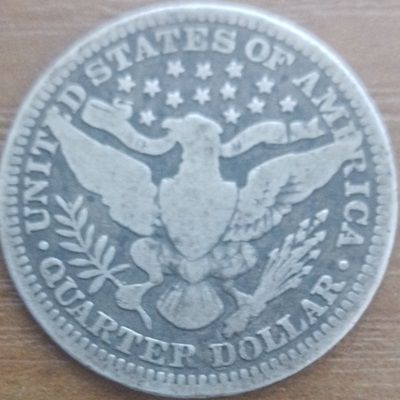
Also a really worn 1902 Barber Quarter - Good 6 at best, but it fills that gap in my albums.
By far the most bizarre thing I bought, and not even a coin, is a Dead Man's Penny, which is now on the Exonumia thread.
I love coins. Especially silver, gold and anything really old.
Member of the Royal Numismatic Society of New Zealand and the Auckland Numismatic Society
Also on that purchase was another Sherwood set of 4 Australian banknotes on 2 manky “Kanga” Pages, that fell apart when I removed the notes. For those who don't know, Hagner pages are thin black card pages with plastic strips that people place stamps, banknotes and other paperalia on. Mostly made in Sweden or the UK, there was a brief Australian product called Kanga, which was similar - but notorious for cheap and low quality glue adhering the strips to the card and as a result, it fell away loosening stamps and angering people.
Anyone who collects stamps in Australasia will know all about “Kanga” pages! I transferred the notes to my Vario pages.
The set of 4 includes the Australian Predecimal Banknotes used between 1953 and 1966. However there are two types, the 1950s “Commonwealth Bank” and 1960s “Reserve Bank”. The 1950s are much rarer and all of these notes had low serial numbers suggesting they are much closer to 1953 than 1960. All are fine and include the scarce £5 and hard to find £10. Maybe easier to find in Australia, I have never seen an Aussie £10 in the wild here.
Aussie £10, it is 180mm long! all notes are in “Fine” condition and wrinkly, but rips, tears, stains or holes. The full lipped Georgian looking dude is Captain Philip the first governor of New South Wales, I say that as some think its Captain Cook. It was the highest face value note in Australia by then, larger values only existed back in the 1910s and 1920s.
Aussie £5, its is 174mm long, the notes all had same width, but differing lengths. Love the back on this one. John Franklin, leader of the ill fated North Western Expedition of 1845 is here, but this was when he was successful for an 1830s Antarctic Expedition that left from Sydney and Hobart Town.
The 2 smaller notes are pretty nice too, they show the Queen on the Pound and explorers Charles Sturt and Hume on the back. The 10 bob shows Matthew Flinders, first European to find Bass Strait between Australia and Tasmania in 1798 (The Aboriginal Australians discovered it!) and old Parliament house on the back, this building was the subject of the 1927 Florins that IM94 and myself are very addicted to at the moment.
I love coins. Especially silver, gold and anything really old.
Member of the Royal Numismatic Society of New Zealand and the Auckland Numismatic Society
The coins I got from my swap with orphenshadow, 59 coins, all but 6 are from countries I didn’t own until now, which brings me up to 101 countries
Congrats on breaking 100 Countries :), my map has a lot more empty spots on it now to replace with animals :)
I made it through my last 2lb bulk bag and there really wasn't a lot of super interesting finds. My first Vietnam and East Africa Indies coins and as of right now my oldest large penny. It's pretty worn, but the stories it could tell :) I also got a couple of very old Chinese coins that I need to photograph and identify.
Also, it's not a coin but it's round and has coins in it :P
I picked up this DVD since my physical books are from 2010 and honestly it hurts my back to pull them down from the shelf.
"All that is gold does not glitter, Not all those who wander are lost; The old that is strong does not wither, Deep roots are not reached by the frost." - J.R.R. Tolkien, The Fellowship of the Ring
Interesting discussions and additions. Happy with the feedback about my halfpenny, and I'll add here that the distracting white matter on the obverse was very easy to remove.
Your Melbourne Centenary Florin looks fine to me. All of the places I look for on the coin for indications of a fake look fine — especially with the provenance you have provided with the coin being from the Sherwood packaging (before they merged with Downies it looks like, so from 2000 at the latest). This is before the large influx of high-quality fakes arrived from China, (there are now easily more fakes than real ones) so there is no reason for me to believe yours is not genuine — although as you said, it appears it has been cleaned in the past. An absolutely incredible deal for under melt! The Canberra florin is also amazing for $15!
I also added a new barber quarter to the collection, mine would only be an AG03 grade.
United States of America 1904 Barber Quarter
this building was the subject of the 1927 Florins that IM94 and myself are very addicted to at the moment.
two of my new coins this month, i have to admit that 8€ coins of portugal are not in the center of common interest, but it could be useful to see the typical differences between proof, Ag925 and usual BU, Ag500 in direct comparism.
Right coin came from a swap, adding it to my database i saw an ebay offer for the proof version (capsule is not original, from some trader): 24€ + 5€90 shipment were a fair deal.
[…] it could be useful to see the typical differences between proof, Ag925 and usual BU, Ag500 in direct comparism.
The coin on the right (Ag .500) was cut from a sealed set, right? In the Numista catalogue it's categorized as a circulating commem, but surely this is wrong? No 8€ coin was ever issued for circulation (regardless of their legal tender status) unless I'm missing something.
[…] it could be useful to see the typical differences between proof, Ag925 and usual BU, Ag500 in direct comparism.
The coin on the right (Ag .500) was cut from a sealed set, right? In the Numista catalogue it's categorized as a circulating commem, but surely this is wrong? No 8€ coin was ever issued for circulation (regardless of their legal tender status) unless I'm missing something.
It’s considered as a circulating commem because one can get it at face value from any INCM shop subject to availability.
[…] it could be useful to see the typical differences between proof, Ag925 and usual BU, Ag500 in direct comparism.
The coin on the right (Ag .500) was cut from a sealed set, right? In the Numista catalogue it's categorized as a circulating commem, but surely this is wrong? No 8€ coin was ever issued for circulation (regardless of their legal tender status) unless I'm missing something.
I cannot know, whether the right/Ag500 coin is cut from a set, but i got it sealed in foil.
@ashlobo perhaps here is the wrong place to discuss the point.
The new german silver comm. coins are classified as non-circ. coins and they are available for face value (+ shipment). Then avallability for face value cannot decide the classifying. I think, real circulation should decide and only members from Portugal can answer.
@ashlobo perhaps here is the wrong place to discuss the point.
The new german silver comm. coins are classified as non-circ. coins and they are available for face value (+ shipment). Then avallability for face value cannot decide the classifying. I think, real circulation should decide and only members from Portugal can answer.
Each country regards their commemorative coins differently. The question of whether to classify on Numista one way or the other has been settled by the members of the respective countries and that is the reason they are listed the way they are in the catalogue.
[…] it could be useful to see the typical differences between proof, Ag925 and usual BU, Ag500 in direct comparism.
The coin on the right (Ag .500) was cut from a sealed set, right? In the Numista catalogue it's categorized as a circulating commem, but surely this is wrong? No 8€ coin was ever issued for circulation (regardless of their legal tender status) unless I'm missing something.
As far as I can tell, it was not from a set. At least for the last 6 years or so, Portugal didn't put these BU coins into any type of set, they were sold/exchanged individually without any packaging (that's why they were available at FV, as ashlobo remarked). Even nowadays, INCM and Banco de Portugal exchange these older BU coins without any type of packaging, so I guess this was also the case at the time of its issue. The foil was probably added later by some coin dealer or collector. In fact, details about distribution of this coin should be stated in the respective Portuguese law from the time of its issue, I just don't have time to look for it now.
To Stefan0205: Really nice coins, the subject they commemorate is also quite interesting and not widely known. Congratulations to getting both versions!
Yes I can see, the proof coin looks stunning the standard one just normal.
I bought some more Australian Florins, these are upgrades of 1919, 22 and 27.
The 27 is the standard coin, not yet another Canberra (I need more average Canberra florins like I need a hole in my head!)
Photos soon.
IM94 - I agree the quarter is pretty seasoned, but thats Barber coins for you, very hard to find in higher grades. My best are gVF dimes from like 1915 and 1916 and my 2 halves I paid a tonne for and they are only VF. But your quarter would get a G4 for the reverse as the rim is complete on that side. So it would be AG3/G4.
I noticed in American catalogues, that Barber dimes are quite easy to EF, but the quarters and halves have a real climb in price between VG and Fine. Most dates of Fine are $30 and VF $75, whereas VG is like $12 or $15. The EF to MS are 4 figures basically. Hence why most Barber halves and quarters are Good or VG. The rubicon is reading Liberty on headband for Fine and 3 letters (3 whole or 2 whole and 2 half) of it for VG.
My best Barber
Its 1916S which is like the last possible date, but this may scrape into US XF45 territory, which is high gVF for us.
Earlier on in the month, I bought a collection of Wheat pennies and the only scarce one was a 1909 S (No VDB) in VF condition, heres a bad close up shot of it.
I love coins. Especially silver, gold and anything really old.
Member of the Royal Numismatic Society of New Zealand and the Auckland Numismatic Society
Editted - The dealer I bought them off, lost his wife to an illness and the funeral was today, so good thing I held off showing them.
Plus my last post was just 2 days ago, and I don't want to be accused of showing off or putting off the people who may feel intimidated by me.
The 1909 S US penny is a new shot, I don't think I have shown that yet.
As for magazines, I can't wait - will get another stan tissue paper note for 1 rublenik from 1992 or a Hispanic inflation piece that says “100 Nova worthlessos”, a tiny aluminium or stainless coin that 1 subunit of a unit that is worth like 10,000 of them to one cent.
I love coins. Especially silver, gold and anything really old.
Member of the Royal Numismatic Society of New Zealand and the Auckland Numismatic Society
Just found these 3 coins from Sweden in a couple of boxes of coins I've just picked up for a few pounds in a Whitsun (Pentecost) Bank Holiday boot fair… 🙂
I tried to find the English version but it doesn't seem to exist. Articles 7 and 8 are particularly relevant and would indicate that the .500 coins are technically circulating. Note that the “new legal dispositions about collector coins" announced in Article 8 came about in 2010 if this means the new European Union legal dispositions. The new law is more restrictive about circulating vs. non-circulating.
As far as i can understand the document, these coins are classified as “moeda de coleccao” ( article 5.3, = coin for colletion).
The articles 8 and 9 seem a guaranty of face value. But let me continue with new added coins, i could get 3 pieces of chile from an auction.
Unfortunatly the condition of the small gold peso is only in the f/vf range, but this seems to be the avarage of existing coins of this type.
They all look to be pretty great condition to me, but I am just a novice :). I found a couple Chilean coins in a bulk bag and compared to that Peso this Centisimo feels like a plastic fake token. I think it's Aluminum
"All that is gold does not glitter, Not all those who wander are lost; The old that is strong does not wither, Deep roots are not reached by the frost." - J.R.R. Tolkien, The Fellowship of the Ring
As far as i can understand the document, these coins are classified as “moeda de coleccao” ( article 5.3, = coin for colletion).
The articles 8 and 9 seem a guaranty of face value. But let me continue with new added coins, i could get 3 pieces of chile from an auction.
Unfortunatly the condition of the small gold peso is only in the f/vf range, but this seems to be the avarage of existing coins of this type.
Really nice pieces. I like the fact that silver 1 peso coins from Chile (and other American states of that period) have the purity of metal written directly on them, even if it was just 0,5 in case of later coins.
Colleagues who only hoard gray-worn silver coins in the bank safe, please sit down, take a pill, and endure this cheap addition to my collection.
Each to their own buddy.
I do have a lot of “Mince and Savory” coins too - if you look at my posts in these threads from 2020 etc - you will see a lot of bags of miscellaneous world coins I used to buy in.
I just don't post them anymore, as the people who supplied them - stopped doing so due to retirement and old age and I moved to another city - so now its just precious worn gray silver for me.
Not all my silver is worn either, worn usually means it is a very expensive or hard to find coin.
I love coins. Especially silver, gold and anything really old.
Member of the Royal Numismatic Society of New Zealand and the Auckland Numismatic Society
Colleagues who only hoard gray-worn silver coins in the bank safe, please sit down, take a pill, and endure this cheap addition to my collection.
Each to their own buddy.
I do have a lot of “Mince and Savory” coins too - if you look at my posts in these threads from 2020 etc - you will see a lot of bags of miscellaneous world coins I used to buy in.
I just don't post them anymore, as the people who supplied them - stopped doing so due to retirement and old age and I moved to another city - so now its just precious worn gray silver for me.
Not all my silver is worn either, worn usually means it is a very expensive or hard to find coin.
We understand each other. We've known each other for a while. And oceans and distance don't matter. Tolerance, respect and understanding are important. I know you've been robbed in the past, so be careful and pay due attention to security.
I wish you good health, stress-free well-being and joy in our hobby, which has been called the "hobby of kings" since time immemorial.
Colleagues who only hoard gray-worn silver coins in the bank safe, please sit down, take a pill, and endure this cheap addition to my collection.
Each to their own buddy.
I do have a lot of “Mince and Savory” coins too - if you look at my posts in these threads from 2020 etc - you will see a lot of bags of miscellaneous world coins I used to buy in.
I just don't post them anymore, as the people who supplied them - stopped doing so due to retirement and old age and I moved to another city - so now its just precious worn gray silver for me.
Not all my silver is worn either, worn usually means it is a very expensive or hard to find coin.
We understand each other. We've known each other for a while. And oceans and distance don't matter. Tolerance, respect and understanding are important. I know you've been robbed in the past, so be careful and pay due attention to security.
I wish you good health, stress-free well-being and joy in our hobby, which has been called the "hobby of kings" since time immemorial.
Ivan
Part of the reason I did it Ivan, was because that magazine reminds me of one I got back in 1999 and 2000 called “Money of the World”, published by British/Italian company “Fabbri” and it was the same thing, you got a basic 16 page magazine which had to be sorted into sections, the first one came with an American 40% silver half dollar and cost like $1.95 or something. The second was with a binder and had the first plastic banknote and coin pages (We even got stickers with the name and value of each coin).
They started off good and reliable, but then I realised the American half dollar was a bait and every number had the same el cheapo coins or some banknote from an ex East European or Soviet country or a Hispanic inflation note. The coins were always aluminium or steel and usually obselete through cheapness like a Turkish 1 Kurus coin of 1970, when it was like 1 million lira to a dollar.
The price was $7 per issue and you got about $1 worth of paper and the numismatic items were basically worth under 1 cent and occasionally a few cents. Then around issue 25, they started missing out numbers and the collection became incomplete. New pages for coins and notes were given away with certain issues and these were the issues that always went missing. After issue 40 or so I gave up and it seemed that I ended up throwing the collection out after I went to Korea in 2003 and stored my things in a friends basement, which got flooded out in a rainstorm.
I also found out that the issues were over a year old when they arrived here and Money of The world was issued in GB, Malta and Ireland in 1997 to 1999. In New Zealand a lot of British magazines sold here are 3 or months old and usually the unsolds from British stores (Modern day trickle down colonialism - let the colonials have our rubbish) and this is common, we get Gibbons stamp monthly 3 to 6 months after they do in the UK and if a magazine sells out in the UK, that is why we don't get that number here.
The whole thing left a sour taste in my mouth and hence why I gave up on it, and I got critical as I saw the same thing happening with your mags, but at least they have newer coins and better presentation - plus you guys are getting the silver coins too, which are decent. All we got was a 1000 year Chinese cash coin that was quite worn.
To end the story, NZ banned the importation of British part work magazines after one promoting building a model car had like 160 parts that cost $14.95 each and again with parts going missing or 5 arriving at once, complaints saw the “dumping” of old stock here ended. We had this for years, 3 - 4 month old British comics with free gifts and a label saying “Not for overseas readers”, plus the prices of these things were well above what Brits paid for it and inflation. It was a scam by British printers to make money out of colonials, as they magazines went to Australia, South Africa, Malta and a few other “colonies” as well.
I love coins. Especially silver, gold and anything really old.
Member of the Royal Numismatic Society of New Zealand and the Auckland Numismatic Society
Colleagues who only hoard gray-worn silver coins in the bank safe, please sit down, take a pill, and endure this cheap addition to my collection.
Each to their own buddy.
I do have a lot of “Mince and Savory” coins too - if you look at my posts in these threads from 2020 etc - you will see a lot of bags of miscellaneous world coins I used to buy in.
I just don't post them anymore, as the people who supplied them - stopped doing so due to retirement and old age and I moved to another city - so now its just precious worn gray silver for me.
Not all my silver is worn either, worn usually means it is a very expensive or hard to find coin.
We understand each other. We've known each other for a while. And oceans and distance don't matter. Tolerance, respect and understanding are important. I know you've been robbed in the past, so be careful and pay due attention to security.
I wish you good health, stress-free well-being and joy in our hobby, which has been called the "hobby of kings" since time immemorial.
Ivan
Part of the reason I did it Ivan, was because that magazine reminds me of one I got back in 1999 and 2000 called “Money of the World”, published by British/Italian company “Fabbri” and it was the same thing, you got a basic 16 page magazine which had to be sorted into sections, the first one came with an American 40% silver half dollar and cost like $1.95 or something. The second was with a binder and had the first plastic banknote and coin pages (We even got stickers with the name and value of each coin).
They started off good and reliable, but then I realised the American half dollar was a bait and every number had the same el cheapo coins or some banknote from an ex East European or Soviet country or a Hispanic inflation note. The coins were always aluminium or steel and usually obselete through cheapness like a Turkish 1 Kurus coin of 1970, when it was like 1 million lira to a dollar.
The price was $7 per issue and you got about $1 worth of paper and the numismatic items were basically worth under 1 cent and occasionally a few cents. Then around issue 25, they started missing out numbers and the collection became incomplete. New pages for coins and notes were given away with certain issues and these were the issues that always went missing. After issue 40 or so I gave up and it seemed that I ended up throwing the collection out after I went to Korea in 2003 and stored my things in a friends basement, which got flooded out in a rainstorm.
I also found out that the issues were over a year old when they arrived here and Money of The world was issued in GB, Malta and Ireland in 1997 to 1999. In New Zealand a lot of British magazines sold here are 3 or months old and usually the unsolds from British stores (Modern day trickle down colonialism - let the colonials have our rubbish) and this is common, we get Gibbons stamp monthly 3 to 6 months after they do in the UK and if a magazine sells out in the UK, that is why we don't get that number here.
The whole thing left a sour taste in my mouth and hence why I gave up on it, and I got critical as I saw the same thing happening with your mags, but at least they have newer coins and better presentation - plus you guys are getting the silver coins too, which are decent. All we got was a 1000 year Chinese cash coin that was quite worn.
To end the story, NZ banned the importation of British part work magazines after one promoting building a model car had like 160 parts that cost $14.95 each and again with parts going missing or 5 arriving at once, complaints saw the “dumping” of old stock here ended. We had this for years, 3 - 4 month old British comics with free gifts and a label saying “Not for overseas readers”, plus the prices of these things were well above what Brits paid for it and inflation. It was a scam by British printers to make money out of colonials, as they magazines went to Australia, South Africa, Malta and a few other “colonies” as well.
geez, that does seem pretty predatory! I would be pretty bitter about the things too If I had had that experience. I don't think we have anything like this in the states at least that I've encountered yet.
It's one thing if you know you are getting cheap common coins for the novelty of it and the magazine is also cheap and somewhat educational, but it sounds like they were obviously trying to make people think that “if I just stay subscribed next month will be THE ONE” and that is pretty scammy.
"All that is gold does not glitter, Not all those who wander are lost; The old that is strong does not wither, Deep roots are not reached by the frost." - J.R.R. Tolkien, The Fellowship of the Ring
The price was $7 per issue and you got about $1 worth of paper and the numismatic items were basically worth under 1 cent and occasionally a few cents.
Have a nice day, and many greetings.
One magazine costs me 11 $ so I pay 44 $ for shipping. I agree with almost everything except that I'm enjoying it so far and it makes me happy.
My happy hormones are released and I feel better.
There are definitely more idiots like me, so it's probably worth it for them to put it into circulation. But everything is temporary and they will definitely end.
The jump from $7 to $11 is probably inflationary. You know, here in the heart of Europe, like the Czechie , we've never had colonies, but I think we could take over California - because of the sea - we don't have that. And now it's such a fashion in the world - to take territory and then bring magazines and toilet paper.
But since this thread is about adding to a coin collection, I'll show you what I received as a gift from a fellow collector last week.
Please refer to the coin holder label in the lower right corner for help.
And now my colleague and the others in our sandbox where we play - so convince me that it's real?
Yes, I forgot to write in my post that on the coin that I received as a gift without commenting (The colleague did not comment on the coin.) on it. So there is Alexander the Great's father on horseback. He Philip II. was an Olympic champion in horse riding, he won first place. And everywhere he is immortalized on horseback (vases, statues, coins, etc.). And the young Alexander had a model. So the coins of Greece.
I agree, I never meant to insult your ability, I mainly made all those snide comments as I would hate to see anyone I respect get ripped off, but then realised I looked stupid posting them and that these magazines give you real joy.
In fact I actually miss the days of getting anomymous bags of change from around the world now. Its harder, all the mission and charity shops list anything they have on Trade Me (Our ebay) and at marked up prices. And even at the international airport the tourists bringing foreign coins are encouraged to put them in giant plastic spheres and they get donated to some charity. I usually see them and start drooling.
The tetradrachm is amazing - such great condition for such an old coin, puts the gray worn coins from 1941 to shame.
I love coins. Especially silver, gold and anything really old.
Member of the Royal Numismatic Society of New Zealand and the Auckland Numismatic Society
A couple more last-minute additions to the collection:
United States of America 1826 ‘Large Cent’
Here are a couple more early American coins. Both of these are full of problems and cull, but they are the first of this type that I own. It is pretty difficult to find one of these large cents that is entirely problem-free.
This first one is an 1826, with a mintage of 1,517,425. PCGS estimates there are 4000 of these left across all grades.
United States of America 1823(?) ‘Large Cent’
Another US large cent, this one being holed and counterstamped on the obverse. This one is noticeably more worn than the former, so it is difficult to determine the last digit of the date of this coin — although I think it is a ‘3’. If this is the case, this coin had a mintage of 1,262,000, and a survival estimate of 1500 across all grades.
More to come, although they will be here in the new month.
As far as i can understand the document, these coins are classified as “moeda de coleccao” ( article 5.3, = coin for colletion).
The articles 8 and 9 seem a guaranty of face value. But let me continue with new added coins, i could get 3 pieces of chile from an auction.
Unfortunatly the condition of the small gold peso is only in the f/vf range, but this seems to be the avarage of existing coins of this type.
That 5 Pesos coin looks to be a very nice pickup! after our discussion I went back and looked it up only 1200 minted according to the catalog. N#34724
"All that is gold does not glitter, Not all those who wander are lost; The old that is strong does not wither, Deep roots are not reached by the frost." - J.R.R. Tolkien, The Fellowship of the Ring
I was lucky, this year was available. I study oceanography and it is always nice to add something related to it to my collection.
4) Coin sets of all nations, Nepal
Needed half and one rupee for my collection, and thought it is easier to buy this set. The packaging has seen better days, but I don't mind. Usually, I break them (Coin sets of all nations sets) up anyways.
5) Got few coins from Zambia. I needed 1 and 2 ngwee from 1983, but the lot contained two more coins.
6) Costa Rica, 5 centimo, 1979
7) Multiple coins from Mauritania
8) Also got few Japanese coins from 1940s. Zinc coins all have a good luster, but unfortunately, also have too many bag marks. Same problem with aluminum coins, although they are a bit worse, because 10 sen is not even MS, and one of the 1 sen has corrosion. Still gonna leave them in my collection, until I find better quality coins.
They are a nice group, the Taiwanese sets are very beautiful, I love that fish coin.
The Singaporean one too, I noticed they issued that $5 coin in the sets, but none really for circulation. If it came out as a full circulation coin, it would have one of the highest face value coins in the world, close to the 500 Yen of Japan.
The zinc sen coins are interesting too, issued at the end of WW2 and very start of postwar era, they were pretty much worthless in face value. They went lower though, a 1 sen coin was issued in clay in 1945.
I love coins. Especially silver, gold and anything really old.
Member of the Royal Numismatic Society of New Zealand and the Auckland Numismatic Society
Ireland 2 Euro 2022 Erasmus found in circulation by a family member on their trip to Spain and kept for me for my collection. I thought it was the Spanish version until closer inspection when I realised it's the Irish edition with a mintage of 500,000. Can't complain.