Help find this coin page at Numista [解決]

11 posts • 219回閲覧

» Quick access to the last post

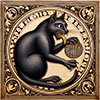
Hello everyone, please help me find the page for this coin here.
 

Silver Prague groschen XIV century

Cropped for use in the territories of Galicia (Halychyna, Галичина)
Diameter 20 mm
Weight 1.72 g

Thanks for help

It looks to be under

Bohemia › Bohemia, Kingdom of • Groschen (1300-1541)

Referee of south atlantic islands

KAROLVS PRIMVS. 

N#81650

Would it be a good idea to create a separate page for this type of coin? This is not a single instance, and it differs in parameters as well

Maybe your coin was curtailed (border removed to take out some silver)

Geison

Maybe your coin was curtailed (border removed to take out some silver)


Yes, this was constantly done with the coins of that time, so it is quite difficult to find an intact Prague grosh
But if we are talking about this coin in the photo - it was found in Ukraine, Lvivska region (which is on the territory of Galicia)
Prague grosh in this territory was cut to look like “Russkiy groshek” which was minted right here in Lviv since 1353, if I'm not mistaken
These two coins are very similar - both have a crown and a lion facing left
The lion had a special meaning, because it was the symbol of this land (and the city of Lviv)
The illiterate population of these lands accepted this clipped money as local currency, so the circular inscription was simply cut out
And of course, this was done to save a little bit silver - almost 2 grams came out of one coin

Fitanik

Geison

Maybe your coin was curtailed (border removed to take out some silver)

And of course, this was done to save a little bit silver - almost 2 grams came out of one coin

IMHO your coin fineness is also not around .795


Period is not covered by regular coin classification catalogues and you would need some book detailing on who was doing that to groats, why they did not counterstamp them and when it was happening. Otherwise you just got vandalized coin.

tokul

Fitanik

Geison

Maybe your coin was curtailed (border removed to take out some silver)

And of course, this was done to save a little bit silver - almost 2 grams came out of one coin

IMHO your coin fineness is also not around .795


Period is not covered by regular coin classification catalogues and you would need some book detailing on who was doing that to groats, why they did not counterstamp them and when it was happening. Otherwise you just got vandalized coin.

I refer to a scientific paper which in turn refers to many other scientific sources.
http://dspace.nbuv.gov.ua/handle/123456789/32525
The problem is that it is not translated into English. You can still just use google translate, but due to the large number of historical and numismatic terms (which it doesn't handle well), the translation will be very bad. Maybe someday I will translate it by hand.
Regarding the coin fineness - I can do a spectral analysis that will show relatively accurate data.
It won't be 100% accurate because you need pure metal for a perfect result and I certainly don't want to scratch the coin

The Abstract does not appear to say the size reduction was done by authorities (probably this would not make sense since the authorities would want their own coins to be used).  


I will check with other admins, but probably the solution is to make a comment (with photos) on either the Bohemian coin, or on the Polish “equivalent” which is mentioned in the article:  N#179654  


Edit:  Confirmng this altered con does not get its own listing, but it would be educational to add a comment elsewhere.

Great, I think I'll add comments to both pages

p.s found another one

Status changed to Solved (Fitanik, 30 10月 2024, 11:47)

tokul

Fitanik

Geison

Maybe your coin was curtailed (border removed to take out some silver)

And of course, this was done to save a little bit silver - almost 2 grams came out of one coin

IMHO your coin fineness is also not around .795


According to Gumowski (Table c, p. 200), the silver content of the Prager groschen was decreasing through the 14th century from 0.938 (15/16ths) under Wenceslas II  (1300-1305), to 0.906 under John (1310-1346), to 0.844 under Charles (1346-1378) to 0.625 under Wenceslas IV (1378-1419).  What's not clear is if the Gumowski figures are from the first coinage of each monarch, or something else.   At the least, we can say the silver content of a Charles Prager groschen was somewhere between 0.844 and 0.625, and that it likely varied over his 30+ year reign 


The same source has the half groats struck in Lviv under Louis of Hungary (as King of  Poland) in the 1370s at 0.875.   I can't find a purity figure for the earlier half groats struck there under Casimir the Great. 


So, it seems likely that the intent was clear … to make some profit substituting (clipped) coins of inferior silver for similar looking ones of better silver.  

The question is whether it was done as a matter of state policy, or by unscrupulous individuals.  


Certainly there are known examples in this part of the world of a state striking “look alike” coins of inferior silver quality:  

N#65413

N#36696

But I have not heard of a mint clipping coins for release into circulation.

» Forum policy

使用されているタイムゾーンは UTC+2:00 です。
現在の時刻は {24時間表記の時間}:{分} です。